

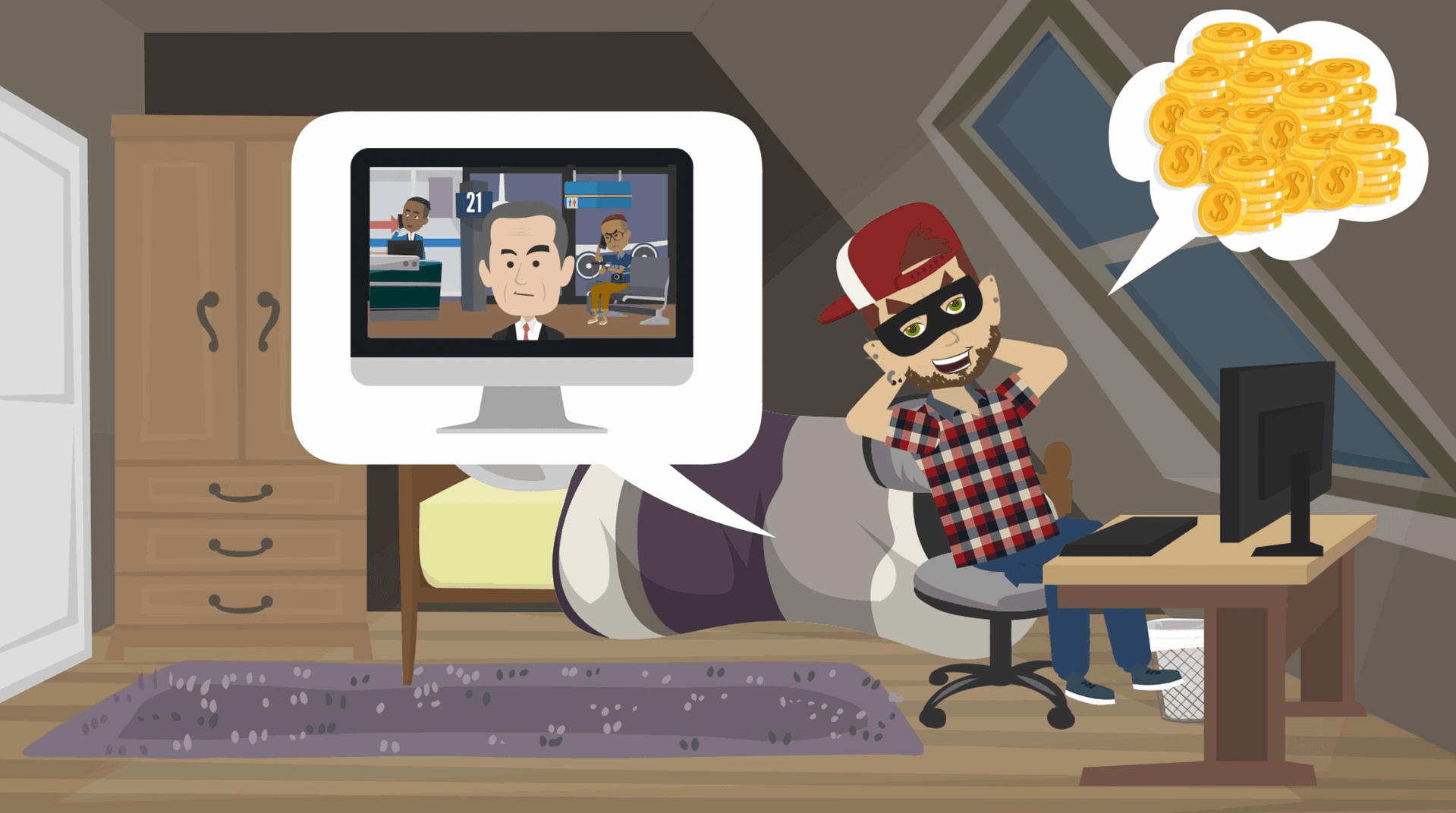
In today’s digital world, not everything is as it seems. With the rise of deepfakes — highly realistic AI‑generated videos, audio, and images — businesses are facing new and evolving cybersecurity risks.
In this short animation, we explore how deepfake technology is being used to impersonate executives, manipulate employees, and carry out fraudulent activity. More importantly, we show how ISO 27001 provides a structured approach to protecting your organisation through risk assessment, secure processes, and staff awareness.
Key Takeaways
- What deepfakes are and why they’re a growing risk
- How criminals impersonate executives using AI
- The dangers of urgent and high-pressure requests
- The real risks to businesses, including fraud and data breaches
- How ISO 27001 helps protect your organisation
- The importance of verification processes and staff training
Call to Action
If you need help protecting your business from deepfake threats, contact ADL Consultancy to see how ISO 27001 can strengthen your information security.
Transcript
Below is the full transcript of the animation, provided for accessibility and to support understanding of deepfake cyber security risks and ISO 27001 protections.
Introduction: The Rise of Deepfakes in Cybersecurity
In today’s digital world, things are not always what they seem.
Thanks to deep fakes, AI generated videos, images or audio that look and sound real, companies face new risks every single day.
Deep fakes can mimic a person’s face, voice or actions with alarming realism.
The Threat: Deepfake CEO Fraud Scenario
But sometimes what you think is your CEO is not your CEO at all.
Sam, I need you to urgently transfer £50,000 to my account as we’re bound to close the biggest deal in the company’s history.
I would do it myself but I’m just about to catch my flight.
Could you do it straight away please?
Understanding the Attack: Deepfake Impersonation
This is a classic deep fake.
Criminals can impersonate executives to steal money, access confidential data, or manipulate staff.
They are experts on playing on your emotions, making you feel panicked so you do as they say.
Recognition: Why Deepfakes Are Dangerous
Sam, stop.
That’s not your CEO, but it looks like him, and it sounds like him.
Exactly.
That’s why deep fakes are dangerous.
They use advanced AI to generate videos and media so convincing even trained staff can be fooled.
The Risks to Businesses
Deep fakes can trick employees into sharing passwords, transferring funds or revealing sensitive information.
Criminals have already used deep fake impersonation to authorise fraudulent transactions and carry out high impact scams.
The Solution: ISO 27001 Information Security
This is where ISO 27,000 and ONE comes in.
It helps companies protect their information by a conducting a risk assessment to identify threats like deep fakes and planned defensive measures.
Protection Measures: Processes and Verification
B implementing clear processes for identity and authorisation, for instance, never through a simple video of voice message alone.
Staff are only take action when the correct process is followed
Training and Awareness
and C increasing staff awareness and training so they know how to spot suspicious requests, urgent demands or unusual executive messages using ISO 27,000.
And one staff are trained to follow strict processes for approval.
That means Sam should never act on a message, video or not, without following the process exactly.
Why ISO 27001 Works Against Deepfake Attacks
Even the best deepfake can’t bypass a well designed information security management system.
Thanks Paul.
Conclusion: Staying Ahead of Deepfake Threats
Deep fakes may be getting smarter, but with ISO 27,000 and one structured approach, risk assessment, training, secure processes and continual improvement, your company can stay one step ahead.
So remember, don’t trust your eyes, trust your security.


Leave A Comment